

How Data-Driven Decisions Are Reshaping the Future of Modern Business
Btimes Insights | August 6, 2026
For decades, business success was measured by factories, machinery and financial capital. Today, that equation has changed. In the digital economy, one of the most valuable assets a company can own is data.
What customers buy, when they buy, how much they spend, which markets are growing and what products are gaining popularity—these insights help businesses make smarter decisions.
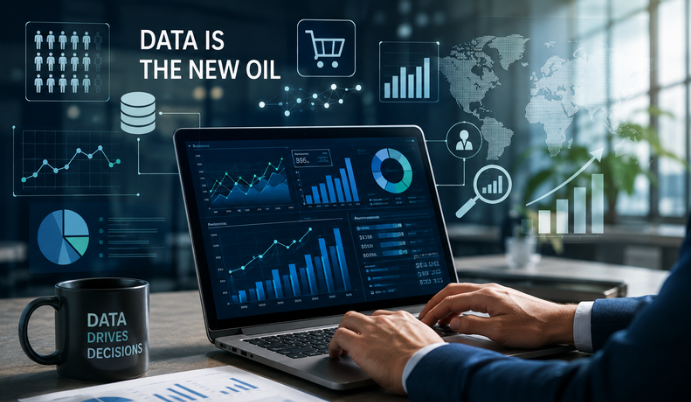
That is why many business leaders describe data as the new oil.
What Is Business Data?
Business data refers to the information organizations collect and use to manage operations and make strategic decisions.
It may include:
- Sales data
- Customer behavior
- Market trends
- Production costs
- Supply chain information
- Website traffic
- Financial reports
- Social media engagement
When analyzed effectively, these data points become valuable business intelligence.
Why Does Data Matter?
Data enables companies to make data-driven decisions instead of relying on assumptions.
For example:
A supermarket that identifies a spike in milk sales every weekend can increase inventory in advance.
An e-commerce platform that detects strong demand in a particular region can improve delivery services in that market.
In both cases, data reduces uncertainty and improves decision-making.
How Leading Companies Use Data
Global technology companies and retailers analyze billions of data points every day.
They use data to:
- Personalize customer experiences
- Predict demand
- Optimize pricing
- Improve advertising performance
- Detect fraud
- Strengthen supply chains
Data analytics has also become the foundation of Artificial Intelligence (AI) and machine learning.
Is Data Important for Small Businesses?
Absolutely.
Data is not only valuable for multinational corporations.
Even a small retail shop can benefit by tracking:
- Best-selling products
- Seasonal demand
- Customer purchasing patterns
- Operational costs
Simple business records often provide insights that improve profitability.
The Risks of Ignoring Data
Businesses that make decisions without reliable data face greater uncertainty.
Potential risks include:
- Poor investment decisions
- Excess inventory
- Misunderstanding customer demand
- Inefficient marketing
- Loss of competitive advantage
The Future of Business
Business competition is increasingly becoming a competition of information.
Companies that can collect, analyze and apply data quickly will be better positioned for long-term success.
Emerging technologies such as Artificial Intelligence, Big Data, Cloud Computing and Automation are making data even more valuable.
At a Glance
| Area | Business Value |
|---|---|
| Sales Data | Understand customer demand |
| Customer Data | Deliver personalized experiences |
| Market Intelligence | Identify growth opportunities |
| Financial Data | Measure business performance |
| Supply Chain Data | Improve efficiency and reduce costs |
Key Takeaways
Collecting data alone is not enough.
Businesses must also:
- Gather accurate information
- Store it securely
- Analyze it regularly
- Turn insights into decisions
Organizations that master these four steps are more likely to remain competitive in the long run.
Btimes Insight
In today’s digital economy, factories and financial capital are no longer the only drivers of business success. The ability to transform data into meaningful decisions has become one of the strongest competitive advantages.
For businesses in Bangladesh, adopting a data-driven culture is no longer optional. Companies that treat data as a strategic asset—and use it to improve products, operations and customer experience—will be better positioned to compete in both domestic and global markets.