

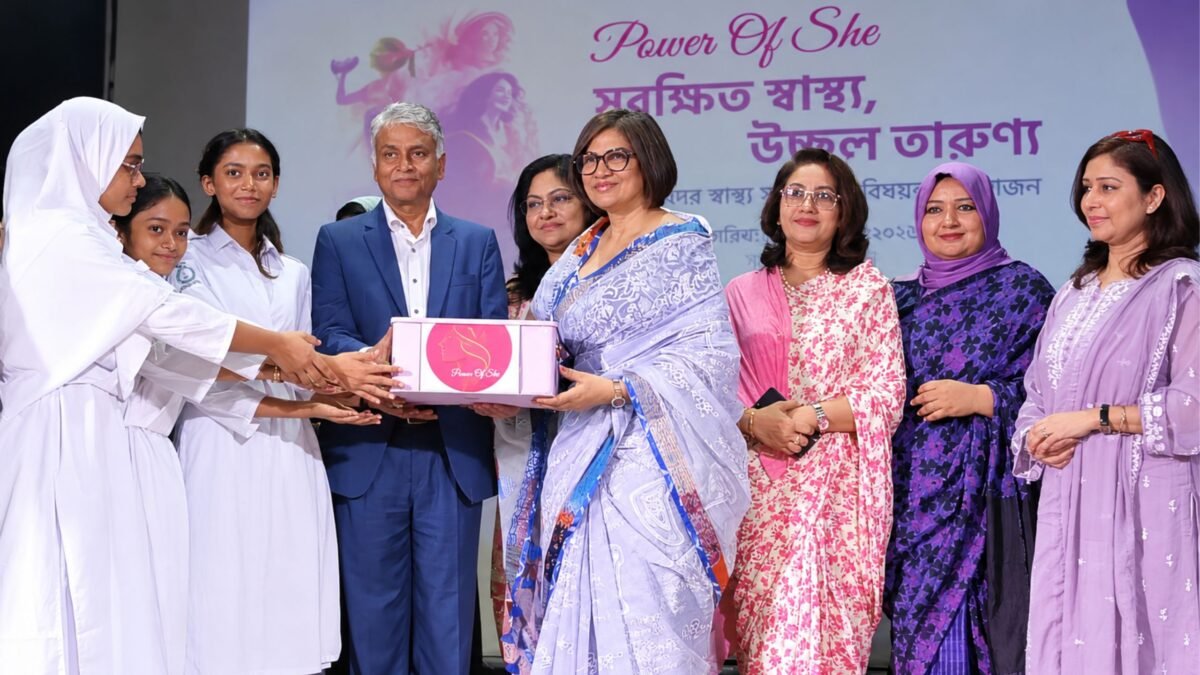
“Surakshit Shasthya, Ucchhal Tarunya” — a special health awareness programme for adolescent girls, organised by Power of She Trust in Dhaka, focused on menstrual health, PMOS, breast cancer and mental wellbeing.
Dhaka, 6 October 2026: Power of She Trust has organised a special health awareness programme for adolescent girls in Dhaka, bringing together healthcare professionals, teachers and students to discuss a range of physical and mental health issues.
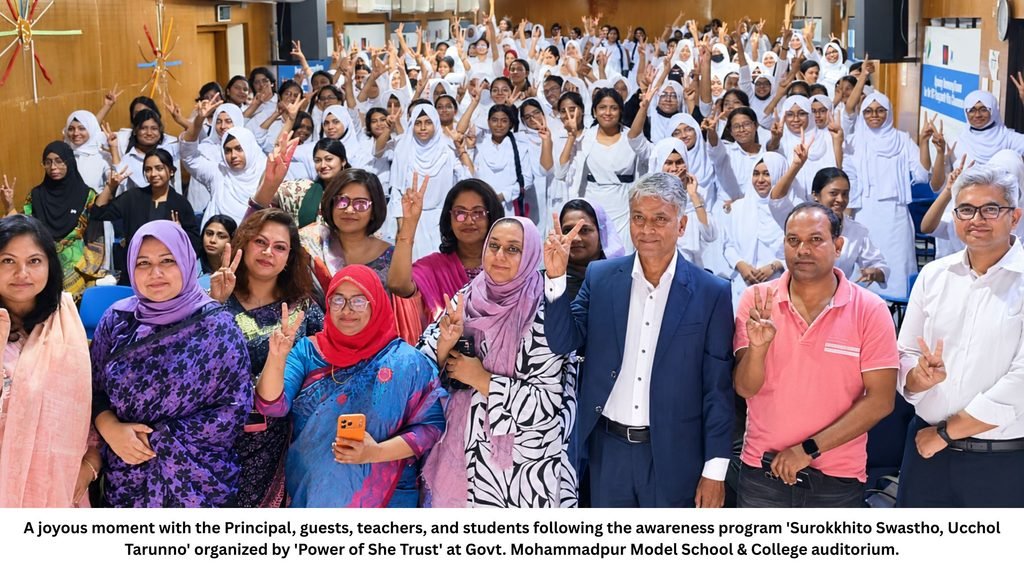
The programme, titled “Surakshit Shasthya, Ucchhal Tarunya” was held at the auditorium of Government Mohammadpur Model School and College on Tuesday.
Teachers, students, women entrepreneurs, doctors and media professionals attended the programme. A pad bank was also introduced for students as part of efforts to promote menstrual hygiene and improve access to menstrual health products.
The programme focused on menstrual health, Polyendocrine Metabolic Ovarian Syndrome (PMOS), infertility, breast cancer and mental wellbeing.
Menstrual health remains a concern
Speaking at the programme, Professor Dr Gulshan Ara, former Secretary General of the Obstetrical and Gynaecological Society of Bangladesh (OGSB), said there were still significant gaps in women’s health awareness, particularly in rural and underserved communities.
She highlighted the importance of educating adolescent girls about menstrual health and hygiene.
Drawing on her field experience, Professor Dr Ara said some adolescent girls in rural areas, including madrasa students, continue to use cloth instead of sanitary pads during menstruation.
She said girls who use cloth should be given proper guidance on washing, drying and storing it hygienically.
She also stressed that providing sanitary products alone was not enough, and that initiatives such as pad banks should be supported by regular monitoring and follow-up activities.
Health awareness on PMOS
Dr Sharmin Abbasi, a gynaecologist and infertility and IVF specialist at Anwar Khan Modern Medical College Hospital, discussed hormonal and metabolic health issues among adolescent girls and young women.
She spoke about Polyendocrine Metabolic Ovarian Syndrome (PMOS), the new international name for the condition previously known as Polycystic Ovary Syndrome (PCOS).
Dr Abbasi said symptoms such as irregular menstruation, unusually heavy bleeding, severe menstrual pain, sudden weight gain, excessive facial hair, acne and significant hair loss should not be ignored.
She advised girls and young women experiencing such symptoms to seek medical advice and avoid taking medication without professional guidance.
She also highlighted the importance of healthy lifestyle habits, including a balanced diet, regular physical activity and adequate sleep.
Breast cancer awareness
Dr Hasan Shahriyar Kollol, Associate Professor of Surgical Oncology at the National Institute of Cancer Research and Hospital, discussed breast cancer awareness, risk factors and the importance of seeking medical advice when unusual changes or suspicious symptoms are detected.
He highlighted the importance of timely medical evaluation and appropriate screening and treatment depending on the type and stage of the disease.
Mental health also in focus
Psychologist Tania Subhashita highlighted the importance of mental health alongside physical health.
She said fear, embarrassment and social pressure can prevent adolescent girls and women from seeking necessary support.
She called on families and communities to create a supportive environment where girls can discuss their physical and emotional health without fear or shame.
Students take part in discussion
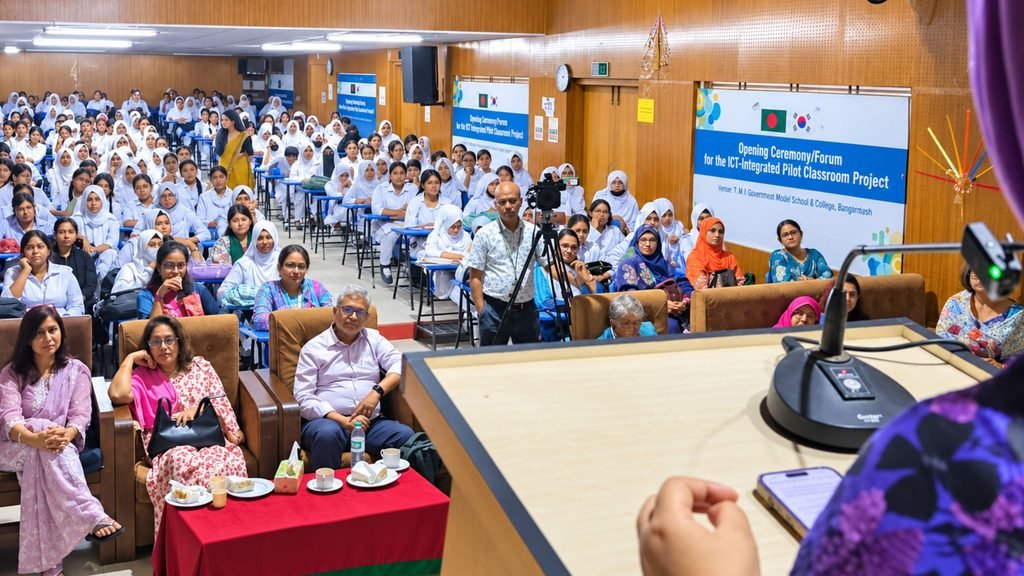
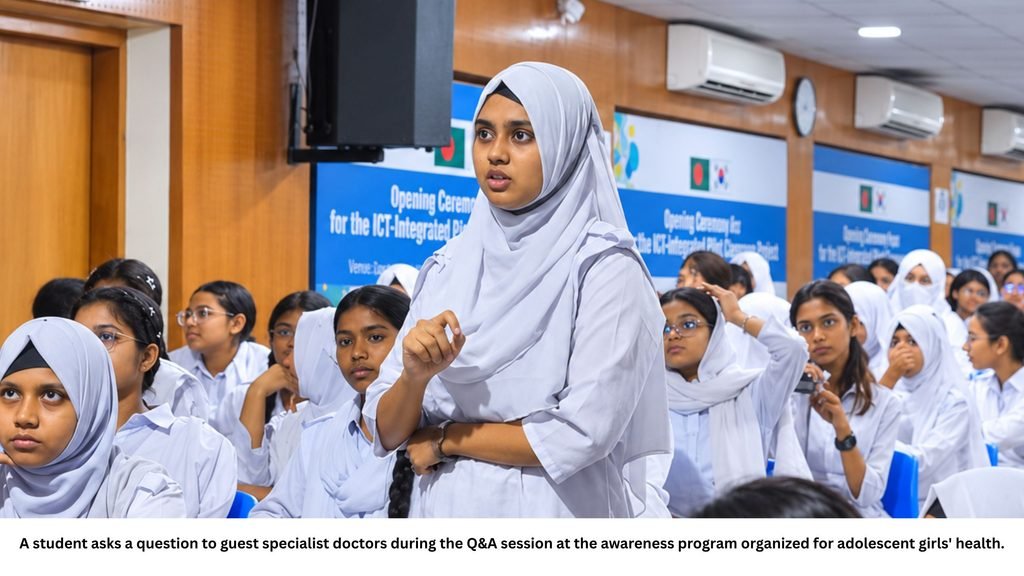
The programme included an interactive question-and-answer session, with students and teachers asking the speakers about PMOS, menstrual health, reproductive health, breast cancer and mental wellbeing.
The experts answered their questions and discussed common misconceptions surrounding women’s health.
‘Health is a right, not a luxury’
Sabina Sabi, Chairman of Power of She Trust, said women’s health should be treated as a fundamental right rather than a luxury.
“If we can provide accurate health information from an early age, a girl can learn to understand changes in her body without fear, seek help when necessary and make informed decisions about her health in the future,” she said.
She said Power of She wanted to take health awareness beyond individual events and reach women and families across both urban and rural communities.
“We want mothers to feel comfortable talking to their daughters about menstruation, adolescent girls to understand changes in their bodies without fear, and women not to ignore unusual changes in their health,” she said.
She added that breaking the silence around women’s health was an important part of the organisation’s work.
Power of She’s work
Power of She Trust has been working since 2017 on women’s empowerment, skills development, entrepreneurship, health awareness and networking.
The organisation conducts activities not only in Dhaka but also in different cities and rural communities across Bangladesh, focusing on women, children and adolescent girls.
Since 2020, it has also organised the Women Summit and Exhibition, providing women entrepreneurs with opportunities for exhibitions, networking, training and mentorship. The organisation also incorporates awareness activities on women’s physical and mental health and reproductive health into its programmes.
Through its initiatives, Power of She Trust says it aims to increase health awareness among women and adolescent girls, improve access to reliable information and support, and help reduce the stigma and silence surrounding women’s health.
Related coverage: New Age | Experts urge greater awareness of adolescent girls’ health issues