

Three Key Economic Indicators That Shape Businesses, Markets and Everyday Life
Btimes Economy | August 6, 2026
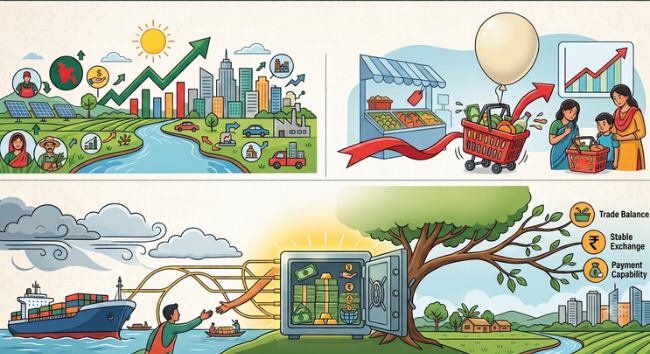
Discussions about Bangladesh’s economy often revolve around three key terms: Gross Domestic Product (GDP), Inflation and Foreign Exchange Reserves.
Whether it’s the national budget, exports, the exchange rate, interest rates or the cost of living, these indicators influence almost every aspect of the economy. Although they may sound technical, understanding them is easier than many people think.
Together, GDP, inflation and foreign exchange reserves provide a broad picture of a country’s economic health.
What is GDP?
Gross Domestic Product (GDP) measures the total value of all goods and services produced within a country over a specific period, usually one year.
Simply put, GDP reflects how much Bangladesh produces in economic value each year.
It includes production and services from sectors such as:
- Agriculture
- Manufacturing
- Ready-made garments
- Construction
- Banking
- Transportation
- Healthcare
- Education
- Information technology
- Other services
The combined value of these activities represents the country’s GDP.
What Does GDP Growth Mean?
In general, a growing GDP indicates:
- Higher production
- Expanding businesses
- More employment opportunities
- Rising incomes
- Increased investment
However, GDP growth alone does not guarantee that everyone benefits equally. Income distribution, employment quality and inflation are equally important.
What is Inflation?
Inflation refers to the general increase in the prices of goods and services over time.
In simple terms:
If the same amount of money buys fewer goods than it did before, inflation has occurred.
For example:
If one kilogram of rice cost Tk 60 last year and Tk 70 this year, that price increase is an example of inflation.
What Happens When Inflation Rises?
Higher inflation generally leads to:
- Rising food and commodity prices
- Reduced purchasing power
- Higher production costs for businesses
- Possible increases in interest rates
- A higher overall cost of living
What Are Foreign Exchange Reserves?
Foreign exchange reserves are the foreign currencies and other reserve assets held by Bangladesh Bank.
These reserves help the country:
- Pay for imports
- Service foreign debt
- Conduct international transactions
- Support exchange-rate stability during periods of market volatility
Why Are Strong Reserves Important?
Higher reserves generally help:
- Ensure smoother import payments
- Increase investor confidence
- Support exchange-rate stability
- Improve the country’s ability to respond to external economic shocks
What Happens If Reserves Decline?
Lower reserves may result in:
- Greater pressure on the US dollar exchange rate
- Weakening of the local currency
- Higher import costs
- Difficulties in importing fuel and industrial raw materials
- Increased pressure on manufacturing and business activity
How Are These Three Indicators Connected?
GDP, inflation and foreign exchange reserves are closely linked.
For example:
When exports increase, Bangladesh earns more foreign currency.
Higher export earnings can strengthen foreign exchange reserves.
Stronger reserves help finance imports, support industrial production and contribute to economic growth.
On the other hand, if global energy prices rise, import costs also increase.
That puts pressure on foreign exchange reserves, raises production costs and may eventually contribute to higher inflation.
At a Glance
| Indicator | What It Measures | Why It Matters |
|---|---|---|
| GDP | Total value of goods and services produced | Indicates overall economic growth |
| Inflation | Rate of increase in prices | Reflects changes in purchasing power and living costs |
| Foreign Exchange Reserves | Foreign currency holdings | Measures a country’s ability to finance imports and maintain economic stability |
Why Do These Indicators Matter?
These three indicators are closely monitored when:
- The government prepares the national budget
- Bangladesh Bank sets monetary policy
- Businesses make investment decisions
- Foreign investors assess Bangladesh’s economic outlook
They provide essential information about the country’s economic direction and financial stability.
Impact on Businesses
For businesses, these indicators influence:
- Import costs
- Production expenses
- Exchange-rate movements
- Investment planning
- Financing decisions
For households, they affect:
- Prices of everyday goods
- Employment opportunities
- Wage growth
- Savings
- Loan interest rates
Btimes Insight
Understanding a country’s economy does not require analyzing hundreds of statistics. GDP, inflation and foreign exchange reserves are among the most important indicators for evaluating economic performance.
GDP measures how much an economy produces. Inflation reflects how rising prices affect purchasing power. Foreign exchange reserves indicate a country’s financial capacity to support international trade and absorb external shocks.
Together, these three indicators provide a practical framework for understanding Bangladesh’s economic health and its future growth prospects.
Editor’s Note: This is an evergreen explainer feature. Economic indicators such as GDP, inflation and foreign exchange reserves change over time. This article explains the concepts rather than presenting fixed statistical figures. The latest official data should be consulted for current economic conditions.